
Root-First Design: The Challenges of Building a House Around a Tree

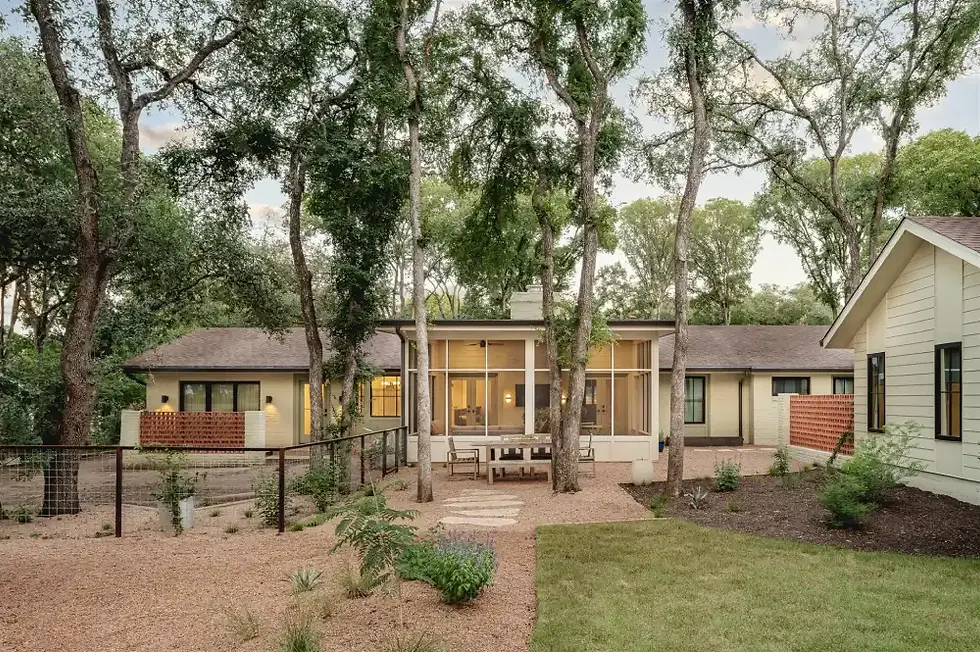
TL;DR: Building a house around a tree requires rethinking design priorities, where the tree becomes a central element shaping the home rather than an obstacle. This blog explains how thoughtful, site-driven planning can preserve mature trees while enhancing both architecture and livability.
Main points:
Why mature trees add lasting value through shade, character, and natural scale
How understanding the Critical Root Zone is essential to avoid long-term tree damage
Structural solutions like pier-and-beam or cantilevers that protect root systems
Ways to balance natural light, shade, and indoor-outdoor connection
The importance of soil health, drainage, and integrated design-build collaboration
A mature tree can shape the entire direction of a project. In many cases, building a house around a tree starts with a shift in priorities.
The tree is not a feature to work around later. It becomes one of the first conditions that defines what the house can be.
Why Mature Trees Should Shape the Design
Mature trees often predate a home by decades. They give a site shade, scale, and character that new construction cannot replace quickly. They also affect how a home feels from the street and from inside the living spaces.
That is why the strongest homes built around trees begin with site-driven planning. The design and build responds to what is already there instead of forcing a clean floor plan onto a complex site.
Understanding Root Systems Before You Draw Anything
The biggest challenge usually sits below ground. Root systems often extend well beyond the canopy drip line, sometimes much farther than expected. That makes early arborist input necessary, not optional.
Anyone asking, can you build a house around a tree, needs that answer to start with the Critical Root Zone. If excavation, grading, or trenching cuts too deeply into that area, the damage may not show up right away. The tree can decline slowly over time, long after construction ends.
Structural Strategies for Building Around Trees
Standard slab foundations with deep grade beams often conflict with healthy root zones. That is where structural planning matters. If the goal is to build a house around a tree without sacrificing the tree, systems like precast piers, helical drilled piers, pier-and-beam foundations, and long spans can help bridge sensitive areas.
In some cases, cantilevered sections also reduce impact. A house built around tree conditions usually depends on this kind of flexibility, protecting roots while keeping the design intact.
Balancing Shade, Light, and Indoor-Outdoor Flow
Trees do more than create constraints. They also improve the way a house performs. A mature canopy can reduce heat gain, soften light, and support passive comfort strategies. That benefit needs balance. Too much shade can make interiors feel dim, but too little respect for the canopy can remove the quality that made the site worth preserving.
Homes with trees in close proximity can use them for the design and planning of views, lines of site, and alignments. Architects can coordinate major openings, roof and gutter detailing, deck and patio surface specifications, and circulation planning to work with protected and mature trees. The resulting homes have indoor and outdoor spaces that feel connected rather than happenstance, and maintenance is reduced or planned into the design.
Drainage, Soil Health, and Long-Term Tree Survival
Tree protection does not end with foundation layout. Drainage management, soil health, and construction staging all matter. Soil compaction can do more harm than saw cuts. Too much impervious cover can change water movement and stress the root system over time. Long-term success depends on protecting the soil as much as the structure. Architects work closely with certified 3rd party arborists and when appropriate municipal tree reviewers and inspectors to ensure plans meet all of the criteria to give trees the best shot to survive.
Why Integrated Design–Build Matters in Tree-Sensitive Projects
Tree-sensitive work asks for alignment from the start. Arborists, designers, and builders need to solve the same problem together. Bring them on early. Invest in locating trees on your topographic surveys. That is how building a house around a tree becomes a thoughtful process instead of a late-stage compromise.
The best results come from treating the tree, the house, and the site as one system. Learn about our construction services and start thinking holistically about your home design.


